

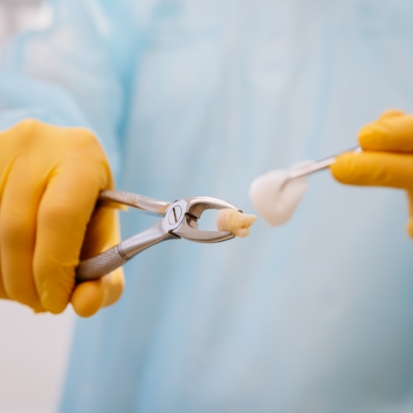
Sometimes a tooth is so damaged that preservation is no longer possible. This can be caused, for example, by severe tooth decay, inflammation, a broken tooth, or advanced gum problems. In that case, it may be necessary to extract the tooth. At De Schans Tandartsen in Leiden, we never make this decision lightly. We always first check if there are possibilities to save your own tooth, for example with a filling, crown, or root canal treatment.
When extracting a tooth is the best solution, we ensure a safe and comfortable treatment. Beforehand, the dentist will discuss in detail what you can expect, why the extraction is necessary, and the options available for replacing the missing tooth. Naturally, you will receive a local anesthetic, so the treatment is usually painless.
After the tooth or molar extraction, you will receive clear instructions for aftercare. This helps us minimize the risk of complications and support a speedy recovery. Do you have any questions or are you nervous about the treatment? Our team is happy to take the time to reassure you and explain everything calmly.
Tooth extraction is a common procedure that is usually quick and safe. At De Schans Tandartsen in Leiden, we take the time beforehand to calmly explain the treatment and answer any questions. Thanks to local anesthesia, most patients experience no pain during the extraction.
Before the treatment begins, the dentist numbs the area around the tooth. As a result, you usually only feel some pressure during the extraction, but no pain. The treatment only starts when the anesthetic is taking effect.
The dentist carefully loosens the tooth or molar from the jaw and then removes it. In some cases, for example when a molar is broken or difficult to reach, it may be necessary to remove it in multiple parts. The dentist works carefully to spare the surrounding tissue as much as possible.
After the tooth or molar is extracted, a gauze pad is placed on the wound to help stop the bleeding. Sometimes stitches are necessary to allow the wound to heal properly. Immediately after the treatment, your dentist will discuss what aftercare is important for a speedy recovery.
After an extraction, it is normal for the treated area to be sensitive for a few days. Mild swelling or post-extraction pain may also occur. These symptoms usually disappear on their own within a few days and can often be effectively relieved with painkillers. By following your dentist's aftercare advice, you support proper wound healing and reduce the risk of complications.


After a tooth extraction, your mouth needs time to recover. Fortunately, in most cases, healing proceeds without problems. By carefully following your dentist's aftercare advice, you support a speedy recovery and reduce the risk of complications.
Immediately after the extraction, a blood clot forms in the wound. This clot protects the underlying bone and gums and forms the basis for proper wound healing. It is therefore important that this clot remains as intact as possible.
It is normal to experience mild post-treatment pain, tenderness, or limited swelling of the cheek. The wound may also bleed slightly for some time. These symptoms usually subside within a few days.
To allow the wound to heal optimally, we advise you to:
Additionally, it can be pleasant to choose soft foods on the first day, such as yogurt, soup, or puree.
Most patients can resume their daily activities the next day. The gums usually heal within one to two weeks, depending on the size of the wound and your personal healing process. If stitches have been placed, your dentist will discuss whether they dissolve on their own or need to be removed.
Although complications are rare, it is advisable to contact us if you experience:
Do you have questions about recovery after a tooth extraction? Please feel free to contact us. contact Meet De Schans Tandartsen in Leiden. We are happy to assist you and are ready to help whenever you need advice or an extra check-up.